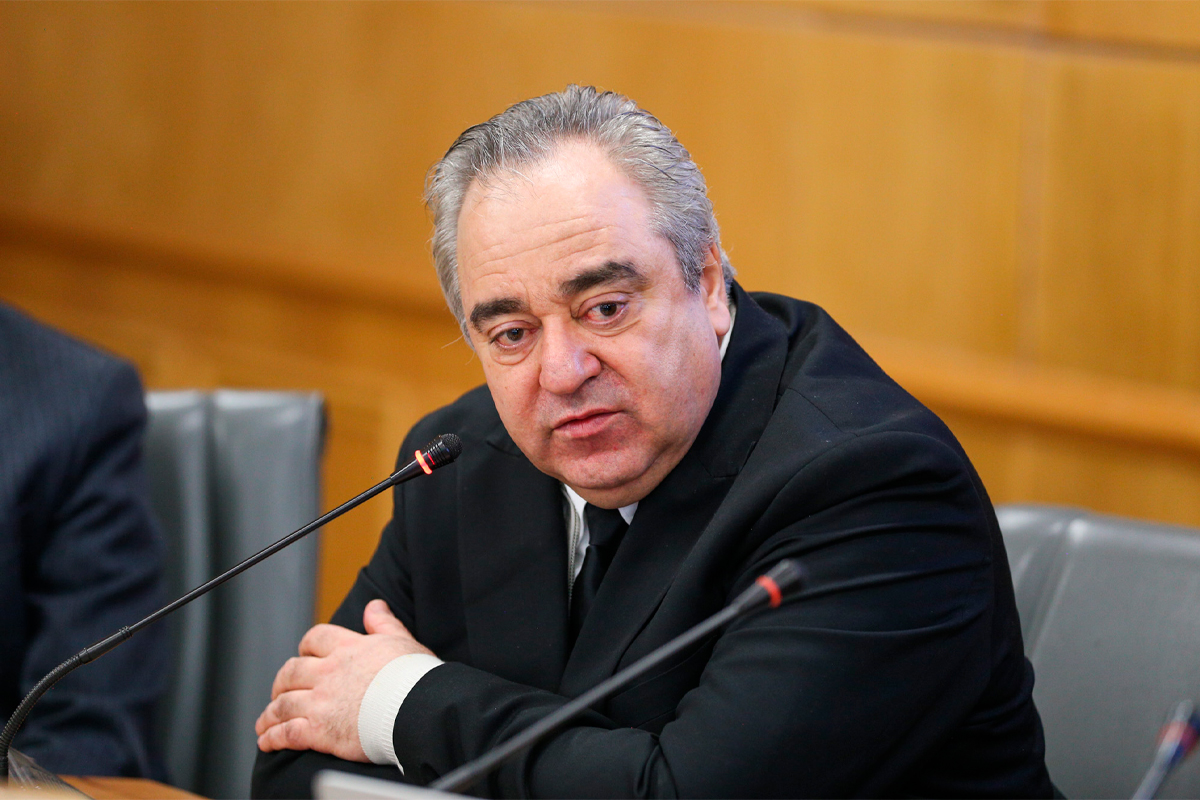
According to the Khorasan Razavi Chamber of Commerce, Industries, Mines and Agriculture, Ali‑Mohammad Shariati‑Moghaddam, Head of the Commission for Knowledge‑Based Enterprises, Digital Economy, and Artificial Intelligence, opened the session by emphasizing the Chamber’s supportive role toward businesses.
He stated that the Chamber should actively stand by economic operators across multiple fronts, yet noted that authorities currently view the Chamber’s role merely as advisory—a role which, he added, is not even being effectively fulfilled under present conditions.
Referring to the recent internet shutdowns, Shariati‑Moghaddam discussed the negative impacts on businesses, highlighting that the interruption of digital connectivity threatens both economic activity and social well‑being.
He stressed that basic human and professional rights must not be overlooked, explaining that access to communication tools—such as the Internet, messaging, and social media—is among today’s essential needs.
“The inability to communicate or use online networks,” he said, “is unimaginable in the modern era. Every citizen has the right to Internet access, and this principle should be explicitly recognized within the Law on Continuous Improvement of the Business Environment as a natural right.”
He further underscored the social responsibility of policymakers, urging that indifference to others’ suffering and challenges is incompatible with human dignity, and that this perspective must be re‑examined and corrected within policymaking and major national decisions.
Original Title: Consequences of Repeated Crises on the Digital Economy: From Erosion to Brain Drain
Source: Khorasan Razavi Chamber of Commerce, Industries, Mines and Agriculture
Publication Date: January 29, 2026
Original Link: https://news.mccima.com/69749/