


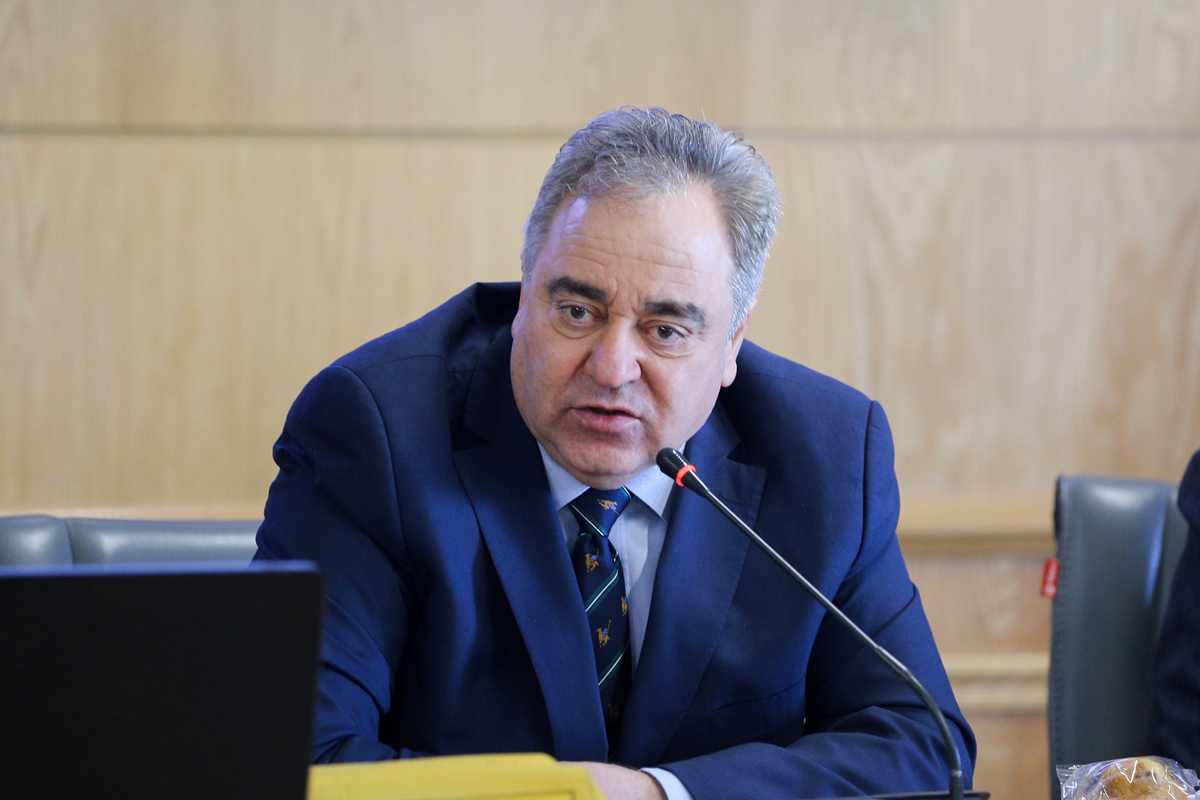
The personal information platform of Ali Shariati‑Moghaddam, quoting AgrofoodNews, reports that a member of the National Saffron Council’s Board announced the smuggling of 50 tons of saffron to Afghanistan, while the coronavirus pandemic has reduced saffron exports by nearly 20%.
During a press briefing, Ali Shariati‑Moghaddam, Board Member of the National Saffron Council, stated that despite saffron bulb smuggling already posing a serious threat to Iran’s saffron industry, an additional 50 tons of the final product have been smuggled across the Afghan border.
When asked whether the continuation of this trend could endanger Iran’s saffron production, he explained that around 30 countries are now pursuing saffron cultivation. If Iran fails to protect this strategic crop and invest in its development, the country may lose its global standing—just as it once did with carpets, caviar, and pistachios.
He noted that saffron prices and sales have been falling since 2017, despite increasing production. According to Shariati‑Moghaddam, policymakers have been unable to create sufficient global demand for this essential and high‑value product.
The Chairman of the Agriculture Commission at the Iranian Chamber of Commerce explained that burdensome regulations—particularly mandatory currency‑repatriation rules—have pushed exporters to ship their saffron to Afghanistan first, before re‑exporting it to other destinations.
Based on their assessments, he said the primary motivation for this workaround is to avoid strict foreign‑exchange obligations. Exporters sometimes sell their saffron at up to 15% below market price in Afghanistan to escape these commitments. As a result, although the export volume remains relatively stable, the export value has dropped by half. Zero‑tax export rules in Afghanistan have further incentivized this rerouting.
Shariati‑Moghaddam emphasized that since 2018, approximately 19,750 kilograms of saffron have been smuggled into Afghanistan, even though official saffron exports to this country are banned. If this continues, he warned, Iran will face a serious threat to its long‑term production capabilities.
He pointed out that fluctuations in currency regulations and international sanctions have increased the product’s vulnerability to smuggling. Saffron’s high value, low volume, and lack of effective border oversight make it an easy target. He also highlighted problems in outdated customs reporting systems, noting that while the official export figure is listed as 13 million dollars, the real value is closer to 150 million dollars.
Multiple exchange rates, he said, damage the country’s economic structure and complicate export operations. Although cultivation area has increased in recent years and Iran was once the exclusive producer of 500,000 kilograms annually, international markets have not expanded in line with rising production. A further 15% growth in production is anticipated this year.
Currently, 95% of the world’s saffron is produced in Iran, mainly across 140,000 hectares in Khorasan Razavi, South Khorasan, and North Khorasan, with smaller areas under cultivation in 20 other provinces.
Shariati‑Moghaddam reported that the COVID‑19 pandemic has reduced saffron export volume by 15–20%. Lower consumer purchasing power, airline shutdowns, restaurant closures, transportation disruptions, and import restrictions all played a role. Consumers have also shifted their spending toward essential goods rather than luxury or medicinal items such as saffron.
He added that the medicinal properties of saffron are now scientifically recognized, fueling hopes that saffron‑based compounds could support future treatments, including COVID‑19‑related research.
Responding to questions about bulk exports—previously a major challenge—he explained that sanctions and post‑COVID logistical issues have severely pressured Iranian packaging companies. As a result, only 6% of Iran’s saffron exports (out of 250 tons) leave the country in consumer‑ready retail packaging. Historically, countries like Spain have purchased Iranian saffron in bulk, repackaged it, and sold it abroad at significantly higher value.